
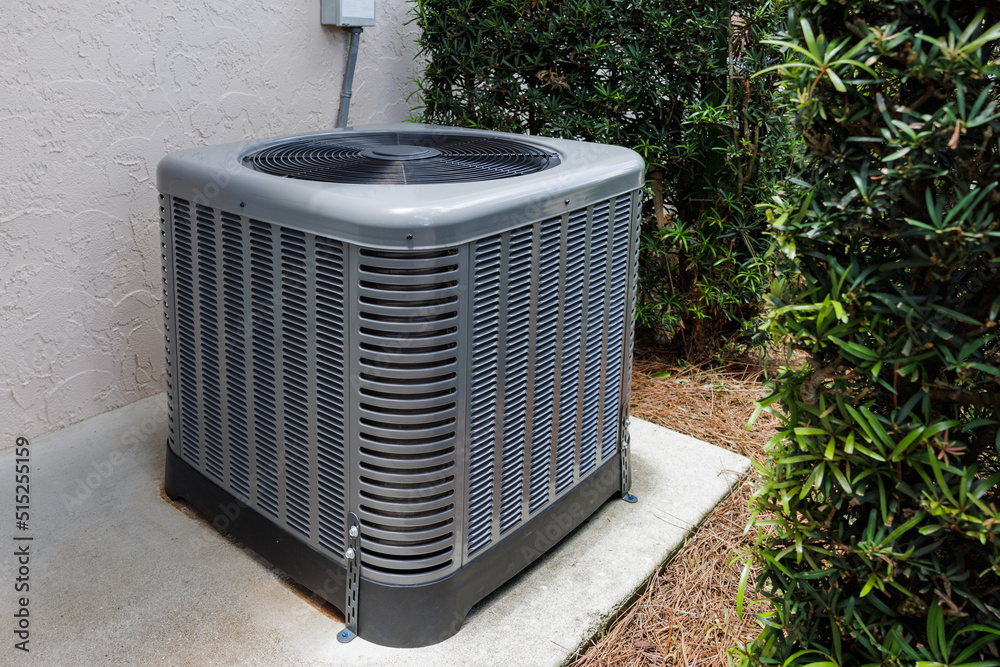
The short answer: once a year, every spring, before you need it. If you have a heat pump rather than a standard air conditioner, make it twice a year — spring and fall — because that system works all twelve months instead of four.
That's the rule. But the reason behind it matters more than the rule itself, because Northern Illinois puts a specific kind of stress on cooling equipment that homeowners in milder climates never have to think about.
Why our climate is hard on air conditioners
Our cooling season is short. Realistically, most systems around here do meaningful work from late May through mid-September — roughly four months. The other eight months, that outdoor unit sits exposed in the yard doing nothing.
That's not the break it sounds like. Here's what those idle months actually do:
Freeze-thaw cycling. Northern Illinois winters swing above and below freezing repeatedly, sometimes within the same day. Every cycle works on seals, fittings, and mounting hardware. Refrigerant leaks that show up in June often started developing in February.
Moisture and corrosion. Snowmelt, ice, and spring rain sit in and around a unit that isn't running. Coil fins corrode, electrical connections oxidize, and the concrete pad underneath can shift and settle.
Debris accumulation. Leaves in the fall, then whatever the wind brings all winter. By April there's often a compacted mat of material sitting against the coil.
Then the cooling season arrives and asks that system to go from zero to full output almost immediately. We don't get a gentle ramp into summer here — it's 60 degrees one week and 93 with a dew point in the 70s the next. A system that sat neglected for eight months gets no warm-up period.
And then there's cottonwood. Anyone who's lived through a Northern Illinois late spring knows what happens in late May and early June. Those seeds find condenser coils the way lint finds a dryer vent. A unit that was clean in April can be significantly restricted by mid-June. In agricultural areas, field dust adds to the same problem through the summer.
What an annual tune-up actually covers
A real maintenance visit is not someone glancing at the unit and hosing it off. It should include:
- Refrigerant charge verification — measured, not guessed. A system running even slightly low loses efficiency and slowly damages the compressor.
- Coil cleaning, both the outdoor condenser and the indoor evaporator coil.
- Electrical inspection — checking capacitors, contactors, wiring connections, and amp draw on the compressor and fan motors. A weak capacitor is one of the most common causes of a July no-cool call, and it's visible on a meter months before it fails.
- Condensate drain clearing. In our humidity, an air conditioner pulls a substantial amount of water out of the air. A clogged drain line backs up into the pan and then onto whatever is below it, which is frequently a finished basement or a ceiling.
- Blower and airflow check, including static pressure.
- Thermostat calibration and cycle testing.
- Temperature split measurement — the difference between return and supply air, which is the clearest indicator of whether the system is actually performing to spec.
If a company's "tune-up" doesn't include measurements, you're paying for a car wash, not an inspection.
Schedule it in March or April, not June
This is the single most useful scheduling advice we can give. Everyone in Northern Illinois discovers their air conditioner is broken on the same three days in late June, and that's when the calendar fills and the wait times stretch.
Booking in early spring means you get a convenient appointment, you find out about any needed repairs while there's time to handle them calmly, and your system is ready before the first heat wave rather than during it.
Heat pump owners should book a second visit in the fall, ideally September or early October, before heating season starts.
What you should do between professional visits
Maintenance isn't a once-a-year event. A few things are on you:
Change the filter every one to three months. During cottonwood season and high-pollen stretches, check monthly. This is the highest-impact thing a homeowner can do, and it's the most commonly neglected — a restricted filter makes the system work harder, raises your bill, and can freeze the evaporator coil solid.
Keep two feet of clearance around the outdoor unit. Trim back shrubs and ornamental grasses, and don't stack things against it. That unit needs to move a lot of air to shed heat.
Rinse the condenser coil a few times each summer. Cut power at the disconnect, then rinse gently from the inside out with a regular garden hose — no pressure washer, which will flatten the fins permanently. Do this once after cottonwood season ends and once or twice more through the summer.
Look for water where it shouldn't be. Puddling around the indoor air handler usually means a condensate drain problem. Catch it early.
Don't cover the outdoor unit for winter. A full wrap traps moisture and gives rodents a comfortable place to nest in your wiring. A piece of plywood on top to keep falling ice off is fine; a sealed cover is not.
When once a year isn't enough
Step it up to more frequent attention if any of these apply:
- Your system is over ten years old. Components are entering the range where small failures become common, and catching them early is the difference between a capacitor and a compressor.
- You have a heat pump. Twice a year, as noted — it runs year-round.
- You have pets, allergies, or ongoing construction. Filters load faster and coils foul sooner.
- You live near open fields. Agricultural dust is hard on coils.
- Your bills have been climbing. That's often the first measurable symptom of a system losing efficiency. We went through the common causes in Why Is My Energy Bill So High? Common HVAC Causes.
One more reason worth knowing: most manufacturer warranties require documented annual professional maintenance. If your compressor fails in year seven and you can't show service records, you may be paying for a repair the warranty would have covered. Keep the paperwork.
The case for staying ahead of it
An annual tune-up costs a fraction of an emergency service call, and far less than the repairs it typically prevents. It keeps your energy use down through the most expensive months of the year, protects your warranty, and extends the working life of equipment that represents a significant investment in your home.
Mostly, though, it means that when we hit a stretch of 95-degree days — and we will — your air conditioner keeps running while your neighbors are calling around looking for anyone who can come out before Thursday.
Graystone Comfort Heating and Cooling offers spring cooling tune-ups throughout Northern Illinois, and we'd much rather see your system in April than at 9 p.m. on the hottest night of July. Give us a call to get on the schedule while it's still open.