
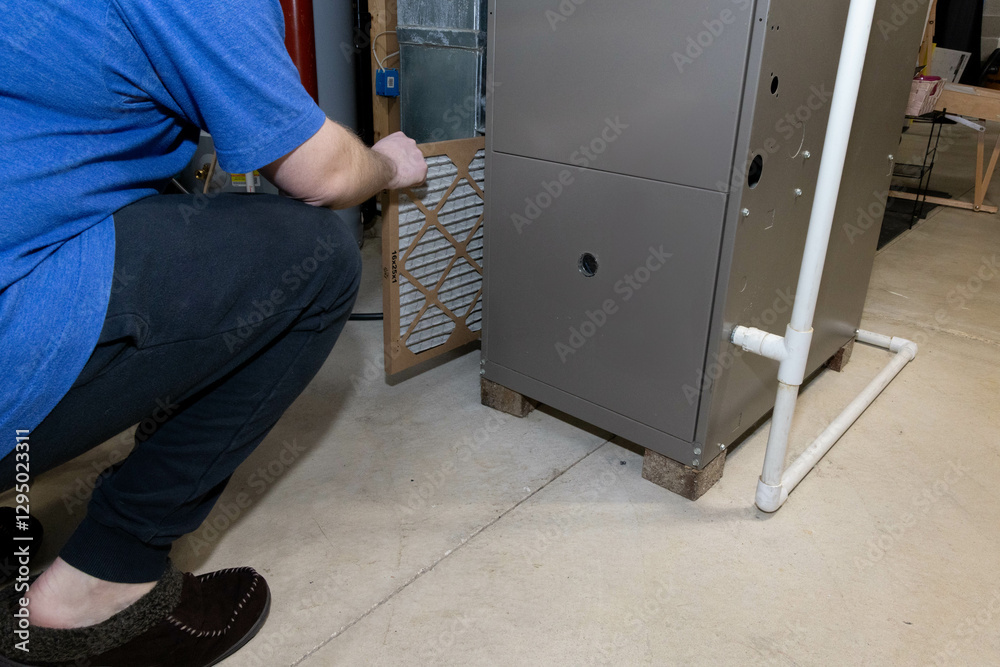
Furnaces almost never die on a mild afternoon in October. They quit on the coldest night of the year, usually around 2 a.m., usually right before a holiday. It feels sudden, but it rarely is. Most of the time the furnace was telling you something for weeks or months before it finally stopped.
The good news is that those warning signs are easy to spot once you know what you're listening and looking for. Catching one early often means a straightforward repair instead of an emergency replacement at the worst possible time.
Here are seven of the most common signs a furnace is on its way out.
1. It's pushing past 15 years old
A well-maintained gas furnace typically lasts 15 to 20 years. One that's been skipped for annual service often gives out sooner. If yours is in that range and starting to act up, age is a real factor in the repair-or-replace decision.
You don't need paperwork to figure out how old yours is. There's usually a manufacturer's label inside the front panel with a serial number, and the first four digits often encode the week and year it was built. Once a furnace crosses the 15-year mark, parts get harder to source and efficiency has usually slipped well below what a new unit would deliver.
2. Your heating bills are climbing for no clear reason
Compare this winter's bills to last winter's. If your usage habits haven't changed, your thermostat settings are the same, and rates haven't jumped, a rising bill means your furnace is working harder to produce the same amount of heat.
That extra effort usually points to something specific: a failing blower motor, a clogged burner, a cracked heat exchanger, or ductwork that's leaking conditioned air into a crawlspace. None of those fix themselves, and all of them get more expensive the longer they run.
3. You're hearing noises you didn't hear before
Every furnace makes some sound. What matters is a new sound. A few worth paying attention to:
- Banging or booming on startup — often delayed ignition, meaning gas is building up before it lights. This one deserves a call right away.
- Screeching or squealing — usually a blower motor bearing or a slipping belt.
- Rattling — could be a loose panel, or it could be a cracked heat exchanger.
- Persistent clicking after the unit tries to start — commonly a failing igniter or flame sensor.
If a sound is loud enough that you notice it from another room, it's worth having someone look at it.
4. Rooms heat unevenly, or the furnace short-cycles
If the bedrooms never quite warm up while the living room roasts, your furnace may no longer be moving enough air to serve the whole house. That can be a failing blower, a badly clogged filter, or a system that's simply worn past its capacity.
Related warning sign: short cycling, where the furnace kicks on for a few minutes, shuts off, then starts again a few minutes later. It's a sign the unit is overheating and tripping its own safety limit switch. Short cycling burns through energy, puts a lot of wear on components, and tends to get worse fast.
5. The burner flame is yellow instead of blue
A healthy gas furnace burns with a steady blue flame. If you look through the inspection window and see a flame that's yellow, orange, or flickering, the gas isn't burning completely — and incomplete combustion can produce carbon monoxide.
Other things that belong in this same category: soot or rust-colored streaks around the furnace, excessive moisture on windows near the unit, or a faint rotten-egg smell.
A safety note worth taking seriously: carbon monoxide is colorless and odorless, and the early symptoms — headache, dizziness, nausea, unusual fatigue that improves when you leave the house — are easy to mistake for a virus. If your CO detector sounds, get everyone outside and call 911 first, then call for service. If you don't have working CO detectors on every level of your home, that's a twenty-dollar fix worth making this week.
6. You're calling for repairs more than once a season
One repair in fifteen years is normal. Two or three in two seasons is a pattern. When a furnace starts failing repeatedly, it's usually because multiple components have reached the end of their service life at roughly the same time — fix one, and the next one goes.
A useful rule of thumb: if a single repair costs more than a third of what a new system would, and the unit is over twelve years old, replacement is usually the better investment. A technician should be willing to walk you through that math honestly rather than just quoting the repair.
7. The air in your house has changed
Furnace problems show up in air quality before they show up as a breakdown. Watch for more dust than usual settling on surfaces, air that feels unusually dry, family members with worsening allergy or respiratory symptoms during heating season, or visible soot near vents and registers.
These can point to a cracked heat exchanger, a failing filter system, or ductwork that's pulling in dust and debris from unconditioned space. Whatever the cause, it's affecting the air everyone in the house is breathing all winter.
What to do next
If you recognized one item on this list, schedule a service visit before the temperature drops. If you recognized three or more, it's time for a serious conversation about whether repair or replacement makes more sense for your home.
And if none of this sounds familiar — that's the best time to schedule a tune-up. An annual inspection catches the small problems on this list while they're still small, keeps your manufacturer's warranty intact, and costs a fraction of an emergency call on a January night.
Graystone Comfort Heating and Cooling has been keeping homes warm for years, and we'd rather find a problem in October than fix a failure in January. Give us a call to schedule an inspection, or reach out any time your furnace starts making a sound you don't recognize.